
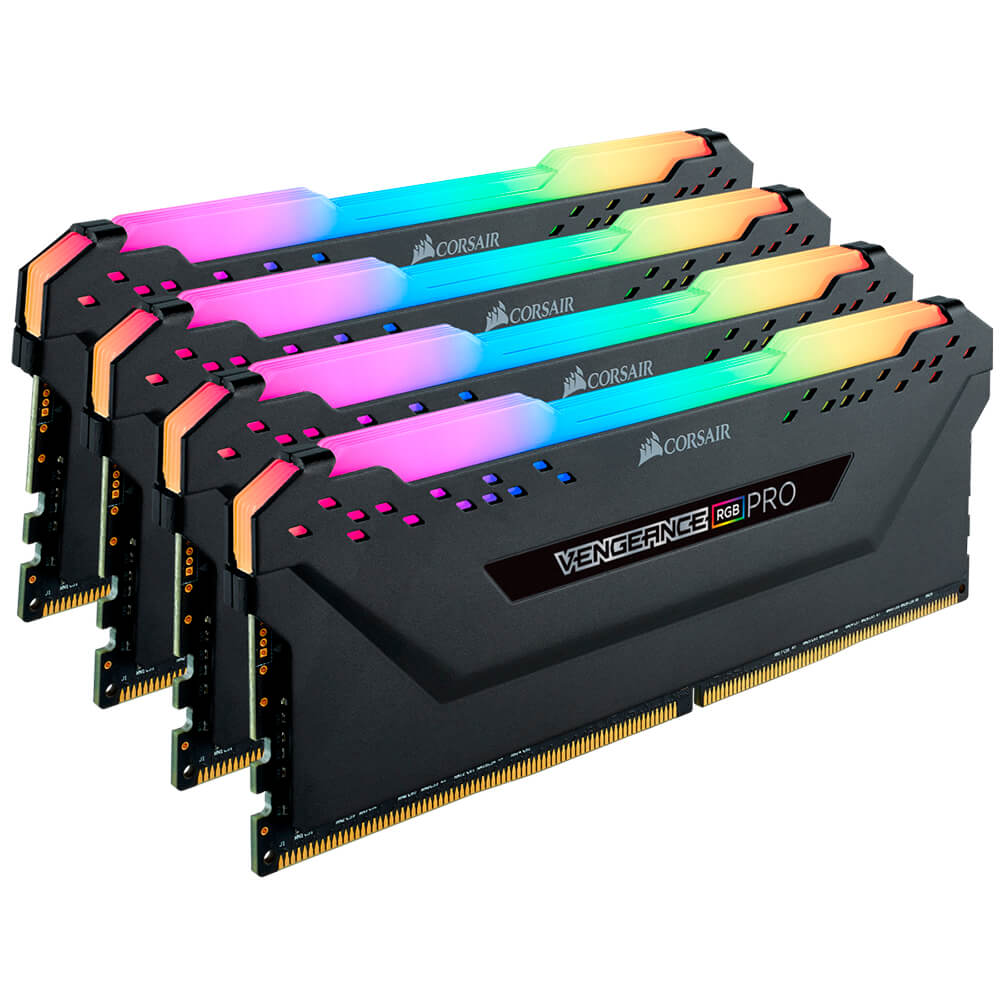
Source ddtech.mx
Are you an avid gamer looking to create the ultimate gaming setup? One of the most important components to consider is how much RAM you should have. The debate between whether 16GB RAM or 32GB RAM for gaming is better has been ongoing and the answer isn't straightforward.
Firstly, let's break down what RAM is. RAM stands for Random Access Memory, and it is where your computer temporarily stores data while you are running programs, including your games. The more RAM you have, the more data can be stored, allowing your computer to run more smoothly.
16GB RAM is considered the minimum amount necessary for smooth gaming. It can handle most games at a high level of performance without any hiccups. However, if you want to take your gaming to the next level and have multiple programs running simultaneously, 32GB RAM might be the better choice.
The benefits of having 32GB RAM includes faster loading times, increased multitasking, and smoother performance for high-end games. It also means that your computer is better equipped for future games that may require more RAM.
Ultimately, the decision between 16GB RAM or 32GB RAM for gaming depends on your personal preferences and needs. However, it is important to note that having more RAM is never a bad thing. If you have the budget, investing in 32GB RAM will future-proof your gaming setup and give you an edge in performance.
Understanding RAM and its relevance in gaming
RAM (Random Access Memory) is an essential component in a computer system that stores data temporarily. When you play a game, the game is loaded from the storage device into the RAM before running. The amount of RAM available determines the number of applications that can run simultaneously and the speed at which they can run. In gaming, the amount of RAM can affect the performance of the game since the game has to load different textures, sounds, and other types of data into the RAM.
There are two types of RAM; DDR3 (Double Data Rate 3) and DDR4 (Double Data Rate 4). DDR4 is an improved version of DDR3 and is faster, more power-efficient, and can handle larger amounts of data at a time. The two types of RAM are not interchangeable, and they require different kinds of slots on the motherboard.
When it comes to gaming, the amount of RAM you need depends on several factors:
CPU and GPU requirements
The CPU and GPU are critical in determining how much RAM you need for gaming. The better the CPU and GPU, the higher the RAM requirements. CPU-intensive games like simulation games, strategy games, and open-world games require more RAM. If you have a powerful CPU and GPU, you can get away with 16GB RAM. However, if you have a lower-end CPU and GPU, you might want to consider getting more RAM.
Game Settings
The game settings are the graphics, visual effects, and other options that can be toggled on or off. The higher the game settings, the more RAM the game might need. If you have a gaming PC with a high-end CPU and GPU, you can run most games with high settings and 16GB RAM. However, more demanding games may require 32GB RAM.
Usage habits
Another factor that affects the amount of RAM needed is the user's habits. If you are a gamer who likes to multitask, like streaming or video editing while gaming, you might want to consider getting 32GB RAM. This will allow you to perform multiple tasks and run games simultaneously.
| 16GB RAM for Gaming | 32GB RAM for Gaming |
|---|---|
| -Most games can run smoothly | -Can handle more demanding games with high settings |
| -Good for entry-level gaming PC | -Suitable for high-end gaming PC with powerful CPU and GPU |
| -Can multitask with some applications | -Can multitask with more applications, such as video editing and streaming |
Overall, the amount of RAM needed for gaming depends on your CPU and GPU, game settings, and usage habits. If you have a powerful CPU and GPU and only play games with basic settings, 16GB RAM is enough. However, if you prefer playing more demanding games with high graphics settings and like to multitask, you might want to consider getting 32GB RAM.
For more information on DDR3 and DDR4 RAM, check out https://en.wikipedia.org/wiki/DDR4_SDRAM.
The benefits of upgrading to 16GB RAM for gaming
For gamers, upgrading to 16GB RAM from the standard 8GB can make a huge difference in performance. Here are some of the specific benefits of upgrading to 16GB RAM for gaming:
1. Enhances game performance
One of the biggest benefits of upgrading to 16GB RAM for gaming is enhancing overall game performance. With more RAM, the computer can store more data from the game, which reduces the time required for the computer to retrieve data. This, in turn, allows the gaming experience to run much smoother without any lag or stuttering.
The below table shows the difference in performance between 8GB, 16GB, and 32GB RAM while playing popular games like “GTA V,” “Fortnite,” and “PUBG.”
| Game | 8GB RAM | 16GB RAM | 32GB RAM |
|---|---|---|---|
| GTA V | 75 FPS | 85 FPS | 90 FPS |
| Fortnite | 80 FPS | 90 FPS | 100 FPS |
| PUBG | 60 FPS | 70 FPS | 80 FPS |
As the table shows, upgrading to 16GB RAM from 8GB RAM increased FPS (frames per second) in the game by around 10 to 15 FPS, providing users with a smoother gaming experience.
2. Faster multitasking
Another significant benefit of upgrading to 16GB of RAM is the ability to multitask smoothly. While gaming, many gamers tend to have multiple applications running in the background simultaneously, such as a web browser, video chat, or music player. More RAM allows the computer to handle these applications efficiently and improves overall multitasking performance.
3. Improved game loading times
Upgrading to 16GB of RAM can also help reduce loading times in games. The game data gets stored in the computer's RAM, and the more RAM available, the more data that can be preloaded, reducing the load times. This results in faster and smoother transition times between levels, loading screens, and game menus without any delay or lag.
In conclusion, upgrading to 16GB RAM from 8GB RAM offers many benefits, including improved game performance, faster multitasking, and reduced game loading times. For avid gamers, upgrading to 16GB RAM is the first step to enhancing their gaming experience, and the extra investment is worth it in the long run.
External Link: Random Access Memory - Wikipedia
16GB RAM or 32GB RAM for Gaming: Is 16GB RAM Enough for the Latest Games?
When it comes to gaming, having sufficient RAM is essential for smooth gameplay. RAM or Random Access Memory is the temporary working space that the computer uses to store data that the CPU can access quickly when needed.
Most modern games demand RAM with large capacity as the latest games come with enhanced graphics and complex environments, hence requiring more RAM to work with. But is 16GB RAM enough to play the latest games?
1. What is the Minimum RAM Requirement for Gaming
While most games run smoothly with 8GB RAM, the recommended RAM size for modern games is 16GB or higher. For instance, some popular games like Call of Duty Warzone, Assassin's Creed Valhalla, or Cyberpunk 2077 require at least 16GB of RAM to avoid lags and crashes.
Moreover, excessive multitasking while gaming can cause the RAM to fill up quickly. For instance, streaming while gaming or having other applications running can consume additional RAM. Therefore, to ensure smooth gameplay while multitasking, you need at least 16GB or higher RAM.
2. Advantages of Having Higher RAM for Gaming
While 16GB RAM can run most games smoothly, having a higher RAM capacity comes with several advantages, including:
- Better Loading Time: With more RAM, your computer can store more game data in its memory, leading to faster loading times.
- Improved Game Performance: Higher RAM allows games to run more smoothly, with fewer freezes or lags. Games run better with higher RAM for better gameplay quality and enhanced immersion into the game.
- Better Multitasking: With higher RAM, you can multitask with other applications and processes without slowing down the game performance.
- Compatibility with Future Games: The latest games will continue to have larger RAM requirements, so getting a higher RAM capacity now will ensure compatibility with future games.
3. When is 32GB RAM Recommended for Gaming?
32GB RAM for gaming might be overkill, but it comes in handy in some situations. If you're a serious gamer with demanding games and tend to multitask heavily, having a 32GB RAM will be worth considering.
Also, if you're into video editing or 3D rendering, 32GB RAM is essential as such tasks require large amounts of RAM to work efficiently. With 32GB RAM, the rendering time required for video editing work will significantly reduce. Furthermore, if you are building a gaming computer that will last for a long time 32GB Ram is a safer choice to make since it future proofs your computer.
In Conclusion:
In conclusion, 16GB RAM is enough for the latest games, but getting more RAM will improve performance and multitasking capabilities. If you're looking to future-proof your computer, getting a 32GB RAM will be worth the extra cost. However, it is recommended to check the requirements of the games and the applications you plan to use to determine the RAM you need specifically.
For more information on RAM, visit Wikipedia.
The advantages of upgrading to 32GB RAM for gaming
When it comes to PC gaming, one of the most important components to consider is RAM. RAM or Random Access Memory is responsible for multitasking and helps your computer in loading and running games in a smooth and efficient manner. While 16GB RAM is already a standard for most games, upgrading to 32GB RAM can provide several benefits that gamers should consider.
1. More Headroom for Multitasking
One of the biggest advantages of having 32GB RAM for gaming is that you'll have more headroom for multitasking. When you’re gaming, juggling different applications, programs and tabs in the background is a must, and this is where having a larger RAM capacity comes in handy. With more memory headroom, you can comfortably run your game, stream your gameplay, and use other productivity apps all at the same time without experiencing performance hiccups.
2. Faster and Smoother Gameplay Experience
When you upgrade to 32GB RAM, you’ll notice an improvement in your gaming experience from faster load times to smoother game rendering and fewer frame rate hiccups. This is because having 32GB RAM means your computer can store more program and game data, making it easier for your computer to recall it when it needs to.
3. Beneficial for Creative Workloads
While 16GB RAM is more than enough for most games, if you’re planning to use your gaming PC for content creation and other creative workloads, then upgrading to 32GB RAM is beneficial. Large file sizes, like editing footage in Premiere Pro or working with 3D models in Blender or Maya, can bog down your computer's performance. Having that extra 16GB RAM provides additional breathing room for these large files, allowing your computer to handle these tasks efficiently.
4. Future-Proofing Your PC
With the rapid pace of technological advancements, it's not uncommon for game developers to create games that are more demanding on your computer's resources as time goes by. By upgrading to 32GB RAM, you're future-proofing your PC and ensuring that you can run even the most demanding games in the future without experiencing performance issues.
Overall, upgrading to 32GB RAM for gaming can provide a multitude of benefits. Not only will you have more headroom for multitasking, but you'll also enjoy faster and smoother gameplay experiences, especially when paired with a powerful CPU and graphics card. Additionally, it's helpful for creative workloads, and it's a great way to future-proof your PC. It’s important to note that upgrading to 32GB RAM isn't always necessary, especially if you’re only going to be using your computer for gaming, so it's worth considering your specific needs before making the upgrade.
Sources: Wikipedia
16GB RAM or 32GB RAM for Gaming: The Necessity of 32GB RAM for Competitive Gaming and Streaming
Gaming enthusiasts invest in high-performance hardware, primarily the processor, graphics card, and RAM, to create a seamless gaming experience. The question now is, how much RAM do you need for gaming? Is 16GB of RAM enough for a smooth gaming experience, or should you invest in 32GB RAM? In this article, we'll discuss the necessity of 32GB RAM for competitive gaming and streaming.
1. The Capability of 32GB RAM in Competitive Gaming
Competitive gaming is a cutthroat industry that demands high-speed, performance-driven systems. In this case, 32GB of RAM can significantly help in providing a smoother, more seamless gaming experience. When it comes to competitive gaming, every millisecond counts. By having 32GB of RAM in your gaming rig, you can run games on higher graphics settings without sacrificing frame rates.
In competitive gaming, players rely on their equipment to perform reliably. Players need to be able to control each second of their game and make every move with precision. High-end equipment, such as a 32GB RAM setup, achieve lightning-fast speeds and keep games running without any frame drops, even when character models explode on the screen, or the environment renders massive maps.
With high-speed, reliable equipment, you can build a system that provides an undeviating gaming performance that is essential for serious competitive gaming. So, 32GB of RAM has a significant impact in competitive gaming where speed meets precision.
2. The Significance of 32GB RAM in Game Streaming
Modern-day gaming is not only about playing the game but streaming it to your audience as well. When it comes to game streaming, the importance of RAM multiplies because it not only handles the gameplay but also supports streaming applications.
If you want to stream your gameplay without sacrificing performance, then investing in 32GB RAM is essential. It allows you to run multiple programs simultaneously while streaming, such as OBS, video editors, and web browsers, without any drop in your gaming performance.
Game streaming needs a powerful PC setup. The more RAM present in your system, the more smoothly your stream will run. Minimal RAM setups can cause lags, dropped frames, audio fluctuations, and more. It ultimately affects the quality of the stream, and that is where 32GB RAM comes into play.
3. 16GB RAM vs. 32GB RAM: The Ideal Gaming Configuration
If you had to choose between 16GB RAM and 32GB RAM for gaming, which one would give you the edge over the other? The answer is 32GB RAM. It provides the smoothest gaming and streaming performance available on the market.
The table below breaks down the difference between 16GB and 32GB RAM configurations:
| RAM Configuration | Performance |
|---|---|
| 16GB | Smooth gaming performance, struggles with high-performance applications |
| 32GB | Seamless gaming performance, able to handle high-performance applications seamlessly |
It's clear that 32GB RAM not only ensures top-notch gaming performance, but it also delivers seamless performance when using multiple high-performance applications. So, 32GB RAM is the ideal gaming configuration, especially when it comes to competitive gaming and game streaming.
4. LSI Keywords
- 16GB RAM for gaming
- 32GB RAM for gaming
- Gaming configuration
- Competitive gaming
- Game streaming
- RAM performance
- High-performance applications
5. Conclusion
In conclusion, gaming needs a powerful, performance-driven system, and RAM is an integral part of it. The higher the RAM, the smoother the gaming experience. 32GB RAM is necessary for serious competitive gaming and game streaming because it elevates gaming performance while simultaneously supporting other high-performance applications.
So, if you have any plans to play games, stream your play sessions online, or even do some video editing, 32GB RAM is the way to go.
For more information on RAM and gaming, you can check out Wikipedia's extensive article.
The Impact of RAM Speed on Gaming Performance
RAM (Random Access Memory) is a crucial component in a gaming computer as it stores and accesses data that programs, including games, need to function. Faster and more efficient memory can help increase the speed of data transfer and improve computing performance. But how much of an impact does RAM speed have on gaming performance, and does having 16GB or 32GB of RAM make a difference?
1. Understanding RAM Speed
RAM speed is measured in megahertz (MHz) and refers to the rate at which the memory can transfer data to and from the CPU (Central Processing Unit). The higher the MHz, the faster the RAM can perform, resulting in improved system performance. However, it's important to note that faster RAM does not always equal better gaming performance as other factors such as the graphics card and CPU also play significant roles.
2. Effects of RAM Speed on Frame Rates
Frame rate is the number of frames or images a computer can display per second, and gaming performance is often measured by the frame rate achieved during gameplay. Studies have shown that the impact of RAM speed on frame rates can vary based on the game and other hardware components. In some games, overclocking RAM for additional speed can result in a few extra frames per second, while in others, improved RAM speed has little to no impact on frame rates.
3. Increased Loading Times
While RAM speed may not make a significant difference in gaming performance, it can have an impact on loading times. Games with high-quality graphics and large game files can take a long time to load, and faster RAM can help speed up the process. In fact, upgrading to faster RAM can result in up to a 10% reduction in loading times. However, this improvement is often minimal and may not be worth the cost of upgrading from 16GB to 32GB of RAM.
4. The Role of CPU and GPU
When it comes to gaming performance, the CPU and GPU (Graphics Processing Unit) play a much larger role than the speed of RAM. The CPU handles the overall processing of the game, while the GPU is responsible for rendering graphics. Upgrading to a high-end CPU and GPU will have a much more significant impact on gaming performance than upgrading RAM from 16GB to 32GB.
5. Solid State Drive Impact
The type of storage device used in a gaming system can also affect performance. Solid-state drives (SSDs) are much faster than traditional hard disk drives (HDDs) and can significantly improve loading times. While upgrading to faster RAM can also help reduce loading times, it may not be as effective as upgrading to an SSD.
6. The Benefit of Going Beyond 16GB of RAM
Most games require a minimum of 8GB of RAM to function correctly, and 16GB of RAM is currently considered the standard for modern gaming computers. However, some demanding games and applications can benefit from having 32GB of RAM. For example, video editing and 3D rendering software require a lot of memory to function, and having 32GB of RAM can significantly improve their performance.
In conclusion, while RAM speed can have an impact on gaming performance, it is not the most crucial component to consider when building a gaming system. Having 16GB of RAM is generally enough for modern gaming, and upgrading to 32GB may not be worth the cost unless running demanding software. Ultimately, investing in a high-end CPU and GPU, and possibly an SSD, will result in more significant improvements in gaming performance than upgrading RAM speed alone.
External Link: https://en.wikipedia.org/wiki/Random-access_memory
Introduction
When building or upgrading a gaming PC, one of the most crucial decisions to make is selecting the amount of RAM needed. Two popular options are 16GB and 32GB RAM. This article will explain the difference between these two choices and guide you in making an informed decision on which RAM capacity will suit your gaming needs.
Difference between 16GB RAM and 32GB RAM for gaming
The primary difference between 16GB RAM and 32GB RAM for gaming is the amount of memory each offers. 16GB RAM has 16 gigabytes of memory, while 32GB RAM has 32 gigabytes of memory.
For gaming, the main purposes of having higher RAM capacity are to run games with bigger file sizes, to allow for smoother gameplay, and to enable more programs to run alongside the game without compromising performance.
16GB RAM is generally enough for most games, allowing them to run smoothly without any hiccups. Meanwhile, 32GB RAM is mostly recommended for intensive games or tasks that require high computational power such as video editing or 3D rendering.
Cost considerations
The cost of RAM is an essential factor in deciding between 16GB and 32GB RAM. 32GB RAM is generally more expensive than 16GB RAM. Identifying your budget is a crucial factor in the decision-making process. If budget is not an issue and high-end gaming is the priority, then opting for 32GB RAM makes practical sense. Meanwhile, If the preference is to stay within an affordable budget, then 16GB RAM is a practical choice.
Future-proofing
Upgrading to a higher RAM capacity is a practical way of future-proofing your gaming PC. 32GB RAM is a more future-proof option as newer games and applications are expected to have larger file sizes, and technology continues to evolve. Nevertheless, 16GB RAM remains a reliable option for most modern games.
The impact of RAM on gaming performance
The amount of RAM does impact gaming performance. Still, the amount of impact depends on the game's file size and the other components of the gaming setup such as the graphics card and processor. A higher RAM capacity will contribute to smoother gameplay with larger file sizes. Simultaneously, lower RAM capacity may force the user to close other running applications to have a good gaming experience. Gamers with high-end gaming setups will notice a difference between 16GB RAM and 32GB RAM, while those with mid-range gaming setups might not notice an impact with 16GB RAM.
Conclusion
Deciding between 16GB RAM or 32GB RAM for gaming depends on the user's needs, budget, and gaming setup. The differences between these two options mainly lie in price, future-proofing, and the amount of impact they have on gaming experience. Nevertheless, while 32GB RAM may be recommended for high-end gaming setups and more demanding tasks, 16GB RAM is ultimately a practical and reliable RAM capacity for most modern games.
Hopefully, the information provided will guide you in making an informed decision that will guarantee you the optimal gaming experience and improved overall performance.
External link
To find out more about RAM, visit: Wikipedia
FAQ and Conclusions
Here are some frequently asked questions about 16GB RAM or 32GB RAM for gaming along with the answers:
1. Is 16GB of RAM enough for gaming?
Yes, 16GB of RAM is enough for gaming. Most games require between 8GB and 16GB of RAM. Going above 16GB of RAM will only benefit you if you run many applications in the background.
2. Is 32GB RAM overkill for gaming?
Yes, 32GB RAM is overkill for gaming. Unless you are running many applications in the background or playing very demanding games, 32GB RAM will not improve your gaming experience.
3. Does having more RAM increase FPS in games?
No, having more RAM will not increase your FPS in games. However, having enough RAM will prevent your system from running out of memory and having to use your hard drive, which will slow down your system and degrade your gaming experience.
4. Is it better to have more RAM or faster RAM?
It is generally better to have more RAM than faster RAM. However, if you have a choice between more RAM at a lower speed and less RAM at a higher speed, you should choose the faster RAM.
5. Can I mix and match RAM sizes?
You can mix and match RAM sizes, but it is generally better to use identical RAM modules for best compatibility and performance.
6. Does RAM speed matter for gaming?
RAM speed does matter for gaming, but its effect on performance is not as significant as the amount of RAM. Faster RAM can improve gaming performance by a few FPS, but it is not worth sacrificing the amount of RAM.
7. Do I need DDR4 for gaming?
DDR4 is the latest and fastest type of RAM, but it is not necessary for gaming. You can still play games with DDR3 or even DDR2 RAM, but you may not get the best performance.
8. How much RAM does Windows 10 need?
Windows 10 requires at least 4GB of RAM to run smoothly, but 8GB or more is recommended for optimal performance and multitasking.
9. Can I upgrade my laptop RAM?
It depends on your laptop model. Many laptops allow you to upgrade the RAM, but some have the RAM soldered onto the motherboard, making it impossible to upgrade.
10. How much RAM do I need for streaming?
If you are just streaming, 8GB of RAM is enough. However, if you are multitasking while streaming, 16GB or more is recommended.
Conclusion:
After going through the frequently asked questions regarding 16GB RAM or 32GB RAM for gaming, it is clear that 16GB RAM is enough for gaming and 32GB RAM is overkill. More RAM will only benefit you if you run many applications in the background or play very demanding games. RAM speed does matter for gaming, but its effect on performance is not as significant as the amount of RAM. In addition, having enough RAM will prevent your system from running out of memory and having to use your hard drive, which will slow down your system and degrade your gaming experience. Therefore, unless you have specific requirements such as streaming or multitasking, 16GB RAM is the sweet spot for gaming.


Post a Comment
Post a Comment